19 Case Studies in Celebrity Brand Ownership
The long-form analysis behind every Archive precedent. From Rihanna's LVMH partnership to Kim Kardashian's $4B shapewear empire — what separates artists who built generational wealth from those who took the check.
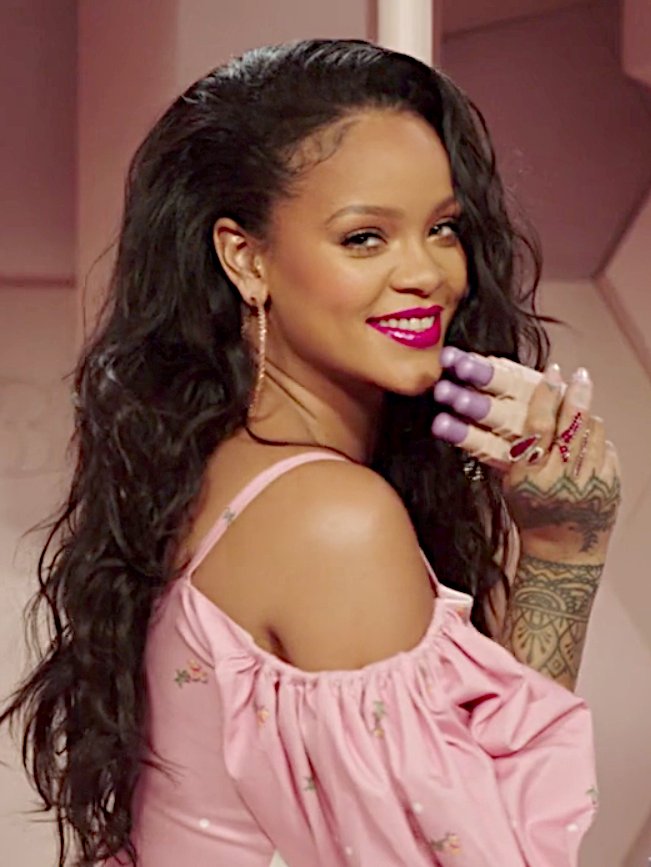
In September 2017, Rihanna became the first woman — and the first person of color — to create an original brand with LVMH Moët Hennessy Louis Vuitton. The structure of that agreement is what separates Fenty Beauty from every celebrity cosmetics deal that preceded it. LVMH did not license her name. It did not offer her a royalty arrangement on products it would own and manufacture. Instead, the parties formed a joint venture in which Rihanna retained majority equity — a figure believed to be approximately 50 percent — while LVMH contributed its manufacturing relationships, global distribution infrastructure, and Sephora retail access. She brought cultural authority. They brought operational scale. The ownership stayed with the founder.
The commercial proof of concept arrived before the ink was dry. Fenty Beauty launched on September 8, 2017 — simultaneously in 17 countries via Sephora and Harvey Nichols — with a 40-shade foundation range at its center. That number was not a marketing decision; it was a market-signal. At the time, most prestige foundations offered 12 to 24 shades, with deep and deep-olive complexions underserved across virtually every major brand. Fenty's 40 shades covered a demographic that had been spending money on foundation for decades while being told, implicitly, that the industry did not consider them its primary customer. The response was immediate: the range generated $100 million in revenue within its first 40 days of sales.
What followed became known in the industry as the Fenty Effect. Within months, MAC, Maybelline, and L'Oréal had announced expanded foundation ranges. Estée Lauder extended its Double Wear line. Dior revamped its Forever foundation. The competitive response confirmed what the sales had already shown: the inclusive positioning was not a niche appeal — it was a correction of a market error that competitors had been making for years. Rihanna had not entered a crowded category with a me-too product. She had identified the largest underserved segment in prestige color cosmetics and built her foundation around it, in every sense of the word.
By 2018, Fenty Beauty's annual revenue had reached approximately $570 million — a figure that placed it, in its first full year of operation, in the same revenue tier as brands with decades of history. The growth did not plateau. The brand expanded methodically into adjacent categories: Fenty Skin launched in 2020, anchoring Rihanna's reputation for shade-inclusivity in skincare with the Universal Skin Tint and Fat Water toner. Savage x Fenty — her lingerie line, launched separately in 2018 but reflecting the same inclusive sizing ethos — was valued at $1 billion in a 2021 funding round. Fenty Fragrance followed. What Rihanna was building was not a product line. It was a brand house — a category architecture in which each vertical reinforces the others and the founder's cultural credibility is the shared equity across all of them.
The financial comparison to the alternative is instructive. A standard celebrity endorsement deal for a beauty brand — the kind routinely offered to artists of Rihanna's profile at the time — would have placed her fee somewhere between $5 million and $20 million annually, likely with a fixed term of three to five years. Total exposure: perhaps $60–100 million over a contract lifecycle, with zero residual value at termination. Against that baseline, her majority stake in a business valued at $2.8 billion as of 2023 represents a return that no flat-fee deal structure could have approximated. The gap is not 10x. It is, depending on the deal terms, closer to 100x.
The negotiating conditions that made this possible are worth examining. In 2017, Rihanna held 12 Grammy nominations, a streaming record as the most-listened-to female artist on Spotify, and a social following exceeding 100 million across platforms. She was not a celebrity seeking a beauty brand to amplify. She was a cultural institution seeking a manufacturing and distribution partner to execute a vision she had already developed. That positioning — coming to the table as an asset-holder, not a supplicant — is why the LVMH negotiation produced equity rather than endorsement income.
LVMH understood the calculus. Their Sephora relationship gave Fenty Beauty premium shelf placement in every major market on day one — something that typically requires years of distributor negotiation for an independent brand. Their manufacturing relationships ensured that the 40-shade launch was not a promise but a product. What they received in return was participation in a brand whose cultural gravitational pull they could not have generated internally, regardless of how much they spent. The partnership was a genuine exchange of asymmetric capabilities. Both parties got something they could not have replicated alone.
The architecture lesson is the one that travels. Fenty Beauty is not a case study about beauty products. It is a case study about what happens when an artist converts cultural authority — which is fleeting and non-transferable — into equity in a brand — which is permanent and compounding. The 40-day $100 million figure was remarkable. The $2.8 billion valuation is the actual outcome of the strategic decision made before a single product was manufactured.
Starpower Take Rihanna didn't sell her name to a beauty brand — she sold her cultural authority to LVMH in exchange for majority ownership of a new category. For a Shakira-tier LatAm artist approaching K-beauty with the same leverage, the structure is replicable: manufacturing partner brings the lab, cultural authority brings the audience, founder retains the equity. That is the Starpower model.
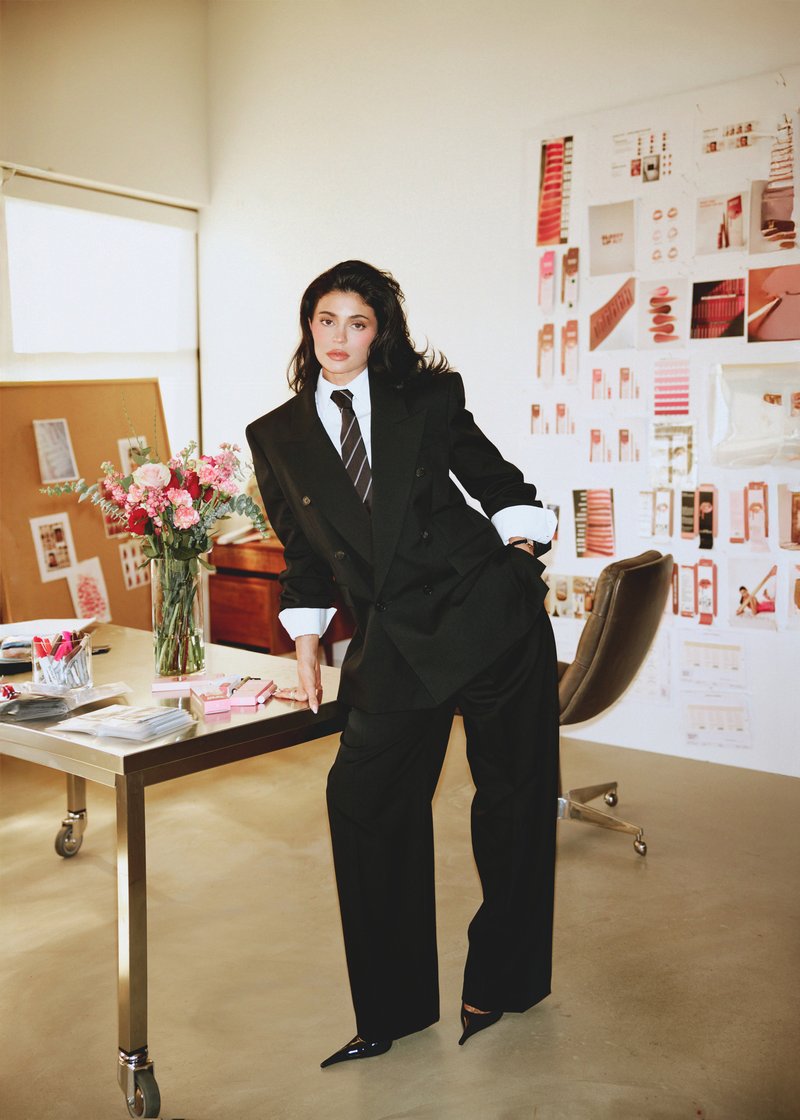
On November 30, 2015, Kylie Jenner posted to her Instagram Stories. She had roughly 40 million followers at the time. The post announced a lip kit — a matte liquid lipstick and matching liner — in three shades, priced at $29. The product had been manufactured by Seed Beauty, a contract manufacturer based in California. Inventory: 15,000 units. Time to sell out: less than one minute. The Kylie Cosmetics origin story is, at its core, a story about what a social media following actually represents when a brand founder chooses to treat it as a distribution channel rather than an audience to be monetized through advertising fees.
The mechanics of the launch were deliberately non-traditional. There was no PR agency seeding products to editors. There was no cosmetics counter in a department store. There was no retail margin being extracted by Sephora or Ulta. There was no advertising spend on Facebook or Google. The entire customer acquisition cost was zero — because Jenner's 47 million Instagram followers were already there, already engaged, already trusting her product recommendations in a way that no paid placement could replicate. The lip kit sold out not because of marketing but because of pre-existing relationship capital that had been accumulating for years through The Keeping Up with the Kardashians franchise, social media presence, and cultural visibility.
Kylie Cosmetics grew without a traditional retail footprint for most of its first three years. The DTC model — direct to consumer, shipped from a warehouse, announced through Instagram — kept margins high and creative control absolute. The brand expanded from lip kits into eyeshadow palettes, contour kits, highlighters, and full complexion products. Estimated revenue in the first 18 months reached approximately $420 million, a figure that Jenner and Seed Beauty both cited, though it was later disputed when Coty's due-diligence financials suggested a lower annualized run rate. The Forbes controversy — which questioned Jenner's "world's youngest billionaire" designation — was illuminating not because the numbers were false but because the gap between reported and audited revenue revealed something important about the operational realities of Instagram-native brands at scale.
The Coty acquisition in August 2019 settled the valuation question commercially. Coty paid $600 million for a 51% stake, implying a $1.2 billion enterprise value for the business. Jenner retained 49% and, critically, retained creative control. What the structure gave Coty was the operational complexity she had no interest in managing — manufacturing relationships, retail distribution, regulatory compliance across international markets, and the back-office infrastructure required to operate at scale. What Jenner retained was her name, her IP, her audience, and the upside on a business that was growing. This is the Coty deal's underappreciated lesson: she did not sell control. She sold operational burden and retail access in exchange for $600 million in liquidity, while keeping the equity that participates in future growth.
The Forbes controversy, rather than diminishing the Kylie Cosmetics story, actually clarifies it. The gap between celebrity-claimed and auditor-verified revenue figures in Instagram-native brands is a function of the difficulty in translating social engagement metrics — reach, impressions, story views — into sustainable revenue. Celebrity brands can generate enormous launch spikes driven by audience curiosity. Sustaining that revenue through product repurchase, category expansion, and operational execution is a different challenge, one that requires infrastructure rather than influence. This is why the Coty deal made strategic sense: Jenner had built the audience and the brand; she needed a partner who could build the company around it.
The distribution model she pioneered remains instructive. Instagram-native launch meant that Kylie Cosmetics reached a global customer base on day one — not because of international distributor relationships but because Instagram's infrastructure is global. A customer in São Paulo could purchase from the same DTC site as a customer in Los Angeles. No retail partner decision was required. No shelf-space negotiation was required. The channel was free, the reach was global, and the margin stayed with the brand. For artists with significant social followings, this architecture represents a structural advantage that traditional beauty brands have spent billions attempting to replicate through influencer marketing programs.
The lesson that travels is the CAC equation. Every brand that builds its customer base through traditional channels — advertising, retail placement, PR seeding — is paying to acquire customers who may or may not become loyal. An artist with 30 million engaged followers has already paid that acquisition cost, in years of content creation and public life, without knowing that a brand was the destination. When the brand launches, those followers are not prospects to be converted. They are a customer base that already exists. The only decision remaining is whether to monetize that base through a flat endorsement fee paid to you, or through the equity value of a brand you own outright.
Kylie Jenner chose equity. The Coty deal confirmed its value. The 49% she retained after a $600 million sale will participate in whatever Kylie Cosmetics becomes over the next decade — growth that a flat fee, however large, would have extinguished on signing day.
Starpower Take Kylie Cosmetics proved what every artist's social following actually represents: a zero-CAC distribution channel that traditional brands pay hundreds of millions to approximate. For a LatAm artist with 30 million engaged followers, K-beauty formulas, and a DTC launch, the Kylie model is the cleanest template — launch direct, build proof of demand, then negotiate strategic partnerships from a position of leverage rather than need.
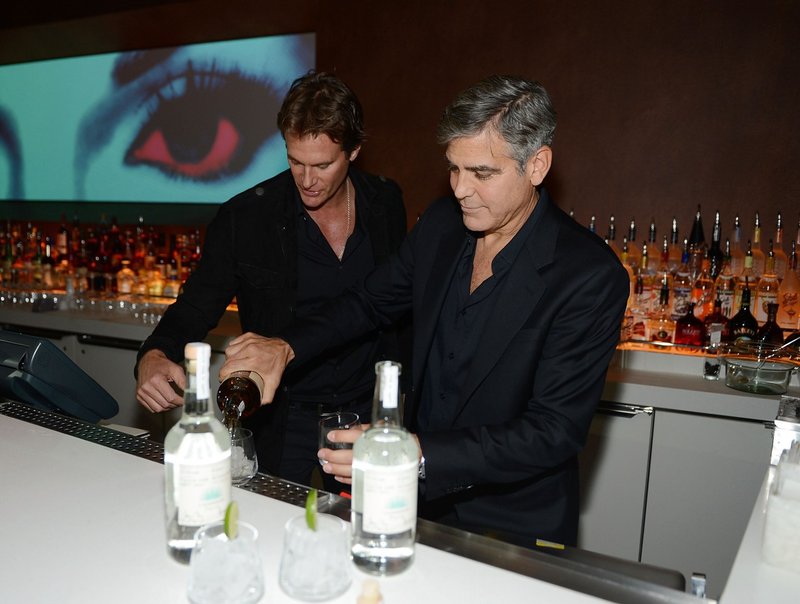
The Casamigos origin story contains no marketing strategy and no investment thesis. George Clooney, his partner Rande Gerber — husband of Cindy Crawford and founder of the Midnight Oil hospitality group — and real estate developer Mike Meldman had neighboring properties in Cabo San Lucas, Mexico. They spent time there with a shared habit of drinking tequila and a shared dissatisfaction with what was commercially available. They began ordering custom batches from a local distillery — a blanco, a reposado — for personal consumption. The quantities grew to the point that the Alcohol and Tobacco Tax and Trade Bureau contacted them: at that volume, they needed a license. They filed in 2013. The brand was an accident of appetite that became a discipline of patience.
The category context they were entering, knowingly or otherwise, was precisely right. The premiumization of tequila in the United States had been building since the Patrón model demonstrated in the late 1980s and 1990s that consumers would pay $40 to $60 for a bottle of spirits they associated with craftsmanship and taste — a price point that had previously been inconceivable in a category dominated by $15 Jose Cuervo bottles. By 2013, the premium tequila category was growing at a pace that outstripped premium vodka, premium gin, and premium whiskey. Casamigos entered a market that was already moving in the right direction, at the right time, with a product that had been designed for personal taste rather than mass appeal.
The marketing posture was equally unconventional. There was no celebrity campaign. Clooney did not appear in advertisements for his own brand. There were no Super Bowl spots, no bottle placements in his films, no traditional media strategy. Distribution grew through Gerber's hospitality network — the bars and restaurants that the Midnight Oil group operated, the venues that Clooney and his social circle frequented, the word-of-mouth that travels through affluent professional networks when the product is genuinely excellent. In its first year, Casamigos moved approximately 120,000 cases — without national retail distribution, without celebrity marketing, and without the kind of consumer advertising spend that most spirits brands consider table stakes.
The product quality is not incidental to this story. The founders were making something they personally wanted to drink, at a price they were willing to pay themselves. This is a different creative posture than most celebrity brand launches, in which the product is engineered to what the market research suggests consumers want and then the celebrity's credibility is applied retroactively. When the founders are the target customer, the product-market fit problem largely solves itself. Casamigos tequila was reviewed favorably because it was genuinely good — and that quality drove the word-of-mouth that traditional advertising was never asked to do.
Diageo, the world's largest spirits company, began watching Casamigos closely by 2015. The brand was growing organically at a rate that suggested something real was happening — not a celebrity novelty that would fade, but a product with genuine consumer loyalty. Diageo's acquisition calculus was straightforward: they could acquire the brand for a premium or spend the next decade watching it grow and eventually attempt to compete with it. In June 2017, they announced the acquisition: $700 million upfront plus up to $300 million in performance earn-outs tied to revenue milestones over ten years. Total potential value: $1 billion.
The timeline from founding to exit was seven years — four years to significant organic revenue, three years of continued growth before the Diageo bid. By the standards of venture-backed startups, this is patient. By the standards of celebrity brand launches, it is exceptional. Most celebrity product launches are designed for maximum immediate commercial impact — a launch event, a media moment, a sales spike — because the economics of the endorsement model are front-loaded. Casamigos worked on a different time horizon because the founders were not in a financial position that required immediate returns. Clooney's film career provided that. The brand could be built properly.
The Diageo deal did not require the founders to exit management. The earn-out structure incentivized continued involvement, and Clooney and Gerber remained actively engaged with brand direction through the transition period. This is a notable feature of well-structured celebrity brand acquisitions: the buyer recognizes that the founder's cultural credibility is part of what they purchased, and structures the deal to retain it. Casamigos without Clooney's implicit endorsement is a different product in the consumer's mind, and Diageo understood this.
The lesson for any artist contemplating brand ownership is that patience is a form of leverage. A brand that has been built over seven years with genuine product quality and organic consumer loyalty commands a very different acquisition conversation than a brand that needs to be sold quickly because the artist's commercial window is narrowing. Casamigos was acquired at a moment when Diageo needed it more than the founders needed the exit. That asymmetry — the buyer's urgency exceeding the seller's — is what $1 billion looks like when it is realized in a single transaction.
Starpower Take Casamigos is the ultimate counter-argument to the assumption that celebrities need flashy launches. Clooney built $1 billion of enterprise value with almost no traditional marketing — just a great product, the right category tailwind, and seven years of patience. The K-beauty equivalent: a celebrity founder who chooses formulas worth recommending over formulas that are easy to sell, then lets the quality compound.
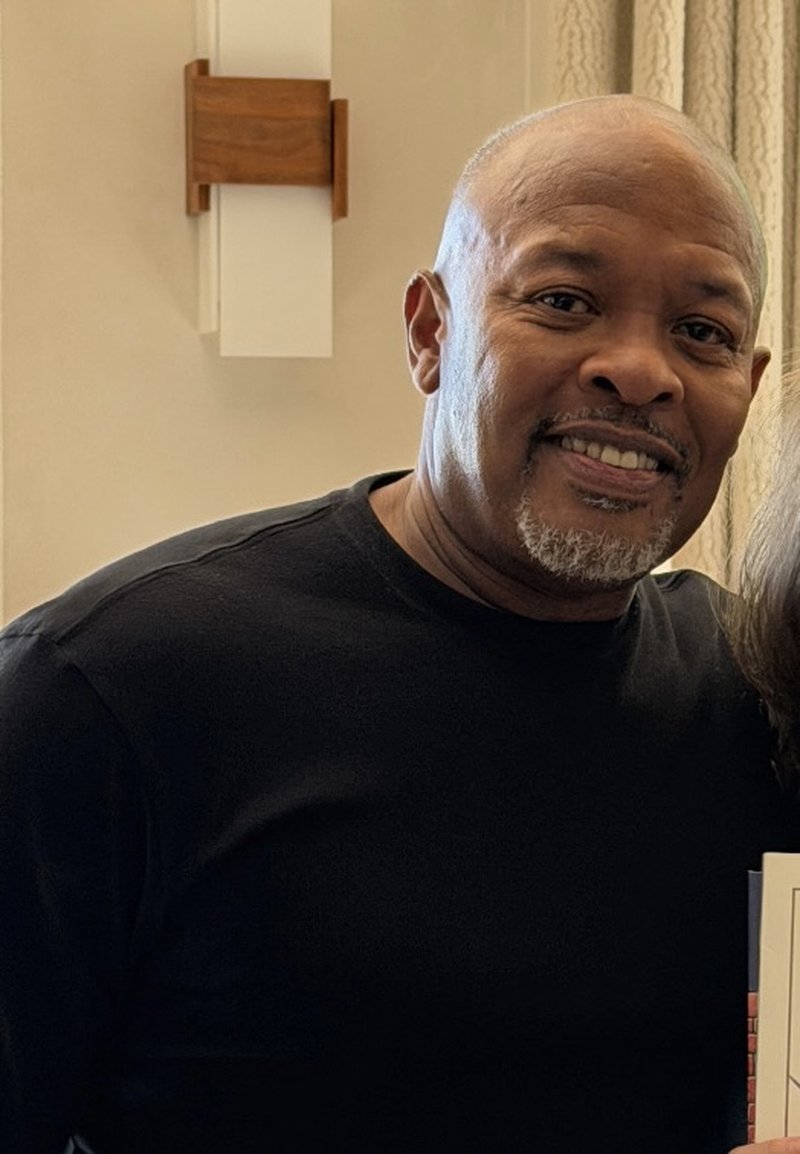
In May 2014, Apple Inc. completed the largest acquisition in its thirty-eight-year history. The price was $3 billion. The asset was a consumer headphone brand founded eight years earlier by a rap producer from Compton and a music executive from Brooklyn. The transaction was the clearest demonstration in recent commercial history of a proposition that most corporate acquirers resist accepting: sometimes the most valuable thing a brand owns is not its products, its technology, or its patents, but the cultural permission its founders hold to define what is desirable in a given market. Apple did not pay $3 billion for headphones. They paid for Dr. Dre's authority over what music culture sounds like.
Andre Romelle Young and Jimmy Iovine founded Beats Electronics in 2006. Iovine was the founder of Interscope Records and one of the most accomplished music producers in American commercial history — his credits included U2, Tom Petty, Eminem, Lady Gaga, and dozens of others. Dre was among the most critically influential producers in hip-hop, a genre that had become the dominant commercial and cultural force in American music. Their founding thesis was articulated simply: most commercially available headphones distorted music in ways that professional recording engineers and musicians would find unacceptable. Beats would make headphones designed to reproduce the sound as the artist intended it to be heard. The initial capital came from Interscope: $30 million in early funding.
The audiophile community's reception was, from the beginning, skeptical. Professional reviewers at publications including Stereophile, What Hi-Fi, and Consumer Reports consistently noted that Beats headphones were not the highest-fidelity option in their price category. For the same $200 to $350, a consumer could purchase Sennheiser, Audio-Technica, or Bose products that technical measurements suggested were superior in frequency response and driver quality. This critique missed the point so completely that it inadvertently illustrated what Beats was actually selling. Beats was not competing in the audiophile segment. It was competing for the right to be the headphone brand that musicians, athletes, and culture-leading consumers chose — and that competition is not decided by frequency response graphs.
LeBron James was wearing Beats on the tarmac before NBA games. Serena Williams wore them at Wimbledon. NFL players wore them during warm-ups, at a time when the league's official sponsor was Bose. The brand earned a $1.5 million fine from the league — which was, in retrospect, among the more cost-efficient marketing expenditures of the decade, because the fine generated media coverage that no paid campaign could have purchased. The product was visible on the most culturally visible bodies in professional sports, not because Beats paid for those placements but because Dre's cultural credibility made the headphones worth wearing. Stars wore them because other stars wore them, and the loop compounded.
The ownership history contains one anomaly that illuminates the brand's resilience. In 2011, HTC acquired a 51% stake in Beats Electronics for $300 million — a deal that valued the company at approximately $590 million. HTC sold half of its stake back to Beats in July 2012 for $150 million, and the remaining half in September 2013 for $265 million. The buy-back at a lower price than the original sale represents one of the stranger chapters in the brand's history — and also confirms that the founders were willing to prioritize control over short-term cash. They left $35 million on the table to get the equity back. The Apple acquisition, two years later, validated that decision at a scale of approximately $2.6 billion.
Dre's estimated equity at the time of the Apple acquisition was between 25 and 30 percent. At $3 billion, this translates to a personal return in the range of $800 million to $960 million. Iovine received an estimated comparable figure. The combined personal returns from the Apple transaction — for two individuals who had founded a brand eight years earlier — represent one of the largest wealth-creation events in the history of music. Dre's net worth, which had been estimated at approximately $800 million before the acquisition, doubled in a single transaction. It was, as he noted in a recorded moment that circulated widely in 2014, "the first billionaire in hip-hop." The framing was culturally specific and commercially precise.
The LeBron James parallel is the cautionary element of this story. James was offered equity in Beats at an early stage of the brand's development — an offer that, had it been accepted, would have been worth approximately $30 million at the Apple acquisition. He declined in favor of a flat endorsement fee — the market-standard choice, the choice that provides certainty, the choice that every manager who is paid on the size of the endorsement fee has an incentive to recommend. The flat fee he received was real money. The equity he declined was ten times that, in a single transaction, with no further work required after the original agreement was signed.
The lesson is not that every equity offer should be accepted — it is that the decision between equity and fee should be made with the same analytical rigor applied to any investment decision. When the brand's cultural authenticity depends on your own cultural authority, equity is not a speculative instrument. It is the most direct way to own the value you are creating.
Starpower Take Apple didn't pay $3 billion for headphones. They paid for Dr. Dre's taste-making authority over music culture — the right to have that authority inside their ecosystem. Any celebrity considering a product category should ask: is my connection to this category deep enough that my endorsement is worth 10x more as equity than as a fee? If yes, the Beats playbook is yours to follow.
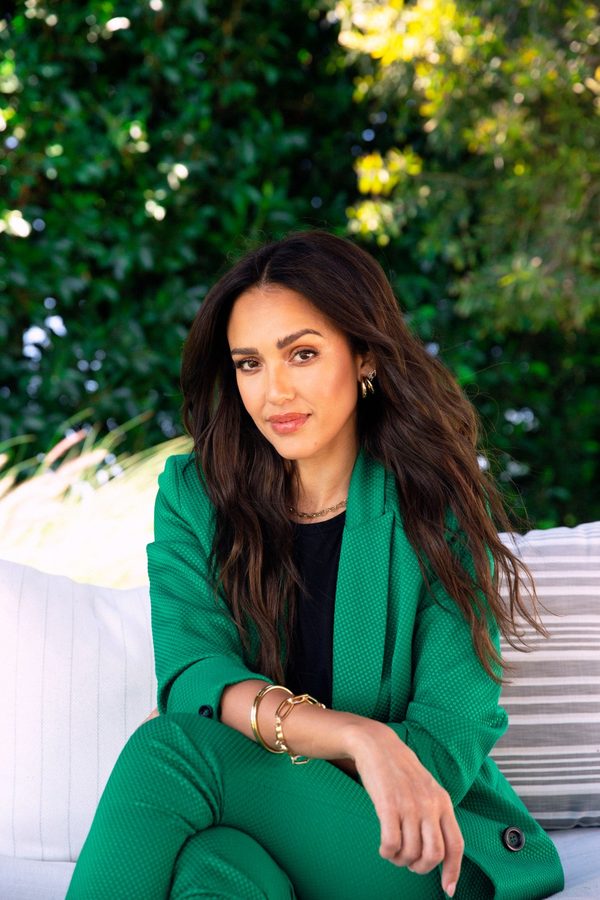
Jessica Alba founded The Honest Company in 2011 with Brian Lee and Christopher Gavigan, launching to consumers in January 2012. The origin story is one of the more genuinely personal in celebrity brand history: Alba, as a first-time mother in 2008, had developed a reaction to laundry detergent she was using on her infant daughter's clothing. Her attempt to identify products free of the specific chemicals implicated in skin sensitivities became an extended research project that revealed how difficult it was to verify exactly what was in consumer baby and personal care products, and how little regulatory oversight required transparency in ingredient disclosure. The company she eventually built was the commercial response to that frustration — a brand whose founding promise was that it would be honest about what was in the bottle, even when honesty was not legally required.
The category insight was significant. In 2012, "clean beauty" and "clean household products" were not mass-market categories. Seventh Generation existed in natural grocery; Method had made design-forward cleaning products accessible in Target. But a brand explicitly built around ingredient transparency, free of a specific list of chemicals the founder had personally researched, positioned for millennial parents who were applying the same skepticism to consumer products that their generation was applying to food — that category was open. Alba was not entering a crowded market. She was defining a new one.
The early distribution strategy was DTC subscription: consumers signed up to receive monthly bundles of diapers, wipes, and personal care products, allowing The Honest Company to build a subscriber base with recurring revenue before pursuing retail. This approach provided cash flow predictability, direct consumer relationships, and data about purchase patterns that traditional retail partnerships would not have yielded. Retail came later: Target became a major distribution partner, followed by Costco, Whole Foods, and Buy Buy Baby. By 2014, estimated annual revenue had reached $150 million. By 2016, it exceeded $300 million. The brand had grown to include over 100 products across baby care, personal care, cleaning, and vitamins.
The IPO in May 2021 was the commercial culmination of that growth. Priced at $16 per share, The Honest Company raised $412 million and debuted at a valuation of approximately $1.4 billion. For a brand that had been founded nine years earlier with a personal conviction about ingredient transparency, the public market event confirmed that the clean-products category had reached mainstream scale — and that The Honest Company had earned the right to be considered its defining brand. Alba's personal equity stake, which had been diluted through multiple funding rounds but remained material, reflected a substantial financial outcome that no endorsement deal in her acting career could have approached.
The post-IPO chapter is where the most operationally instructive elements of the Honest story emerge. Shares declined significantly from the $16 IPO price over the following eighteen months, reaching lows around $3 by late 2022. Several factors contributed. The Environmental Working Group flagged specific Honest products for containing chemicals that the brand's marketing implied it excluded — ingredient transparency controversies that struck at the core of the brand's promise rather than its marketing. Supply chain disruptions in the post-COVID environment put pressure on margins and product availability. And the competitive landscape had transformed: P&G, Unilever, and Johnson & Johnson had all launched or acquired clean-positioned product lines, reducing the category whitespace that Honest had occupied alone a decade earlier.
The post-IPO challenges do not diminish the strategic achievement of the build — they specify its limits. The Honest Company demonstrated that a celebrity-founded consumer brand can achieve IPO scale and public market validation. It also demonstrated that once a brand reaches public market scrutiny, the gap between marketing narrative and operational reality is measured in real time, by analysts and regulators, at a granularity that private-company founders rarely experience. The ingredient controversy was not a fabrication; it was an operational failure to maintain the quality-control standards the brand's own promise demanded. That kind of failure is survivable in a private company. In a public company whose stock is priced on brand trust, it is a structural problem.
The manufacturing lesson is the one that applies most directly to K-beauty brand founders. Korea's tier-1 OEM/ODM houses — the founders and CEOs of which Tejune counts as personal friends — operate under regulatory frameworks (KFDA, EU Cosmetics Regulation, FDA) that require ingredient disclosure and quality verification at the batch level. Choosing a manufacturer whose regulatory rigor is the product, not just the packaging, eliminates the class of operational risk that contributed to Honest's post-IPO share decline. The formula is the brand promise. If the formula is right, the brand is defensible. If the formula is wrong, no amount of marketing can protect the equity value of the promise you made.
What Alba got right — category timing, founder authenticity, DTC-first distribution, retail expansion as a second phase rather than a first — remains a functional blueprint. The Honest Company exists as a listed public company because those decisions were correct. The IPO lesson is that public markets require a different operational discipline than private growth — and that celebrity founders who intend to go that route need manufacturing and quality-control infrastructure that is as rigorous as the brand story they tell.
Starpower Take The Honest Company is the proof that celebrity-founded brands can achieve IPO-level exits — and also the reminder that a great brand story requires great operations behind it. For a K-beauty founder, the Honest lesson is to choose manufacturing partners whose quality and regulatory rigor are the product, not just the packaging.
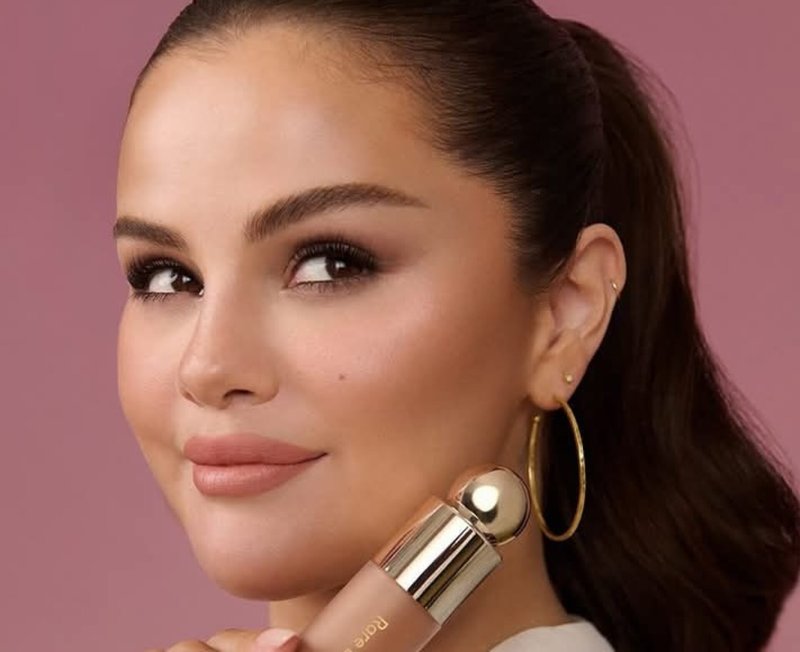
Rare Beauty launched on July 29, 2020, eleven days after the World Health Organization declared the COVID-19 pandemic a global health emergency of the highest concern. Most brands were retrenching. Retail was in chaos. The conventional wisdom was that a prestige beauty launch in the middle of a pandemic, through Sephora — a brand dependent on in-store discovery — was commercially imprudent. Rare Beauty's subsequent performance is the definitive counter-argument to cautious timing in brand building: when the brand story is genuinely compelling and the product range is genuinely excellent, the market finds it regardless of external conditions.
The founding architecture was deliberate in ways that distinguished it immediately from the standard celebrity beauty launch. Rare Beauty's initial range included 48 shades of the Soft Pinch Liquid Blush and a foundation in a similarly wide shade range. The price point — $22 for the blush, $29 for the foundation — positioned the brand in accessible prestige, below the Fenty Beauty price tier, above mass market. Sephora exclusivity was a strategic choice: rather than distributing widely across Ulta, Target, and drugstore channels, Rare Beauty accepted lower immediate volume in exchange for premium brand positioning. Being discovered in Sephora tells the consumer something about the brand that being available everywhere does not.
The brand's structural decision that proved most durable was the Rare Impact Fund. From inception, Rare Beauty committed 1% of all annual sales to a fund supporting mental health access and awareness programming. This was not a response to consumer pressure; it was built into the brand architecture before the first product was sold. The fund's purpose was inseparable from Gomez's personal history: her 2017 kidney transplant, her bipolar disorder diagnosis, her extended public conversations about the mental health challenges she had navigated as a public figure from childhood. The brand pillar was not a positioning strategy applied to a founder's story. It was a founder's story that had found a brand structure to express itself through.
The distinction matters enormously for competitive defensibility. Any beauty brand can donate 1% of sales to mental health. Any beauty brand can write the word "authentic" in its brand guidelines. What no competitor can replicate is the specific moral authority that Gomez holds to speak about mental health — authority earned through a decade of public disclosure, hospitalization, advocacy, and lived experience. When a competitor copies the mechanic, the consumer immediately recognizes the difference between a charitable initiative and a brand that exists because of one. The brand pillar is protected not by intellectual property but by authenticity, which is a more durable competitive moat than any patent.
The commercial inflection point arrived in 2022, in the form of a single product that achieved one of the more remarkable viral trajectories in recent beauty history. The Soft Pinch Liquid Blush — part of the original launch range — became the subject of a wave of TikTok content driven by a common discovery: the product required an almost comically small amount of pigment to produce a visible effect. The phrase "a little goes a long way" generated millions of user-created videos, each one functionally a product demonstration to a new audience. Estimated revenue from the blush SKU alone in 2022 exceeded $60 million. A product that had been available since the brand's founding became, through organic user content, one of the most commercially significant single SKUs in Sephora's portfolio.
By 2023, Rare Beauty's reported annual revenue had reached approximately $350 million, with a valuation that analysts and media placed at $2 billion and above. Acquisition conversations were reported across several major beauty conglomerates, including Estée Lauder and LVMH. Gomez has stated publicly that she intends to retain control of the brand — a decision whose financial logic, at the Fenty Beauty precedent, is straightforward: a $2 billion brand growing at the pace of Rare Beauty is worth considerably more held than sold at today's valuation.
The Sephora exclusivity strategy deserves its own analysis. Restricting distribution to a single premium retail partner limits the brand's addressable market in the short term but shapes the brand's perception in ways that pure distribution volume cannot. A product discovered in Sephora carries implicit endorsement from the curator relationship — Sephora's buyers are regarded by consumers as taste-makers whose selections signal quality. Wide multi-retailer distribution eliminates this halo. The trade-off between brand positioning and sales volume is a genuine strategic tension, and Rare Beauty's $2 billion valuation suggests that Gomez's team made the right call.
The three-year timeline from launch to $2 billion valuation is remarkable by any standard in consumer brand building. It reflects a convergence of strategic decisions that all happened to be correct simultaneously: brand pillar selection, price point, retail exclusivity, shade inclusivity, and the unexpected virality of a single product that had been in the range from day one. Not all of these were predictable. But the ones that were — the mental health anchor, the founder authenticity, the Sephora partnership — were deliberate. And deliberate good decisions compound in the same direction as lucky ones.
Starpower Take Rare Beauty's $2 billion in three years is a masterclass in brand pillar selection. Gomez didn't anchor in beauty trends — she anchored in something she had genuine moral authority to speak about, which meant the brand pillar was protected from competitors by authenticity rather than patents. For LatAm artists, the equivalent question is: what do you have genuine authority to anchor a brand in? Start there.
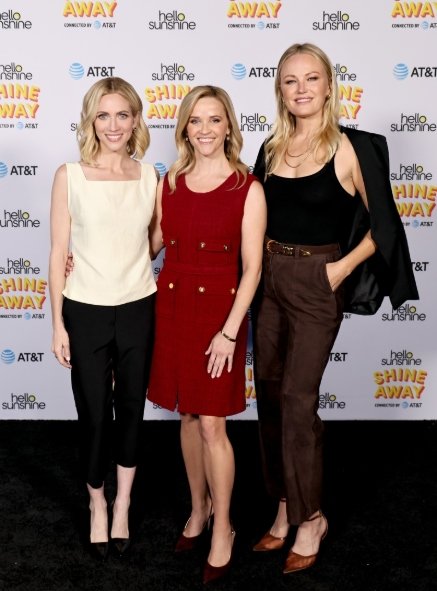
Reese Witherspoon founded Hello Sunshine in 2016 as the successor to Pacific Standard, the production company through which she had produced Wild and Gone Girl. Hello Sunshine's stated mission was to tell female-driven stories across film, television, books, podcasts, and digital content — not as a charitable aspiration but as a commercial thesis. Witherspoon's conviction was that female-driven narratives were systematically underproduced relative to consumer demand for them, and that the market was therefore mispricing the intellectual property that would serve that demand. She built Hello Sunshine to own the IP that the studios undervalued.
The production credits that followed validated the thesis quickly. Big Little Lies premiered on HBO in February 2017, an adaptation of Liane Moriarty's novel that Hello Sunshine produced alongside David E. Kelley. The series won eight Emmy Awards including Outstanding Limited Series and delivered two of the most commercially significant female performances of the television season, from Witherspoon and Nicole Kidman. Little Fires Everywhere, an adaptation of Celeste Ng's bestselling novel, premiered on Hulu in March 2020 and generated the streaming platform's most-watched debut in its history at the time. The Morning Show, developed for Apple TV+ and launched in November 2019, became one of the anchor shows of Apple's streaming launch. Each of these was a female-driven story that most studios had passed on or undervalued before Hello Sunshine optioned the underlying material.
The Reese's Book Club, launched in 2017, became one of the most commercially significant developments in the publishing industry in the past decade. Witherspoon selects approximately one book per month — often emerging authors, frequently debut novels, consistently female authors and authors of color — and announces the selection to an audience that by 2021 exceeded ten million followers across platforms. The commercial effect on selected titles is immediate and measurable: selected books consistently reach the New York Times bestseller list within days of the announcement. Publishers began factoring the possibility of a Reese's Book Club selection into their marketing projections for eligible titles.
The Book Club's strategic importance to Hello Sunshine extends beyond its cultural influence. It is a content pipeline. Witherspoon selects a book that resonates with her audience. That selection creates a public audience for the book and a public association between Witherspoon and the narrative. The adaptation rights for that book become naturally available to Hello Sunshine — not necessarily cheaply, but at a moment when Witherspoon's direct relationship with the story is commercially visible to studios and streaming services. The Book Club identifies the IP; the production company converts it. The flywheel compounds with each selection.
Blackstone, the private equity firm with approximately $1 trillion in assets under management, acquired a majority stake in Hello Sunshine in August 2021 for $900 million. The transaction was notable for several reasons. Blackstone is not a traditional entertainment investor; their portfolio is dominated by real estate, infrastructure, and credit assets. Their investment in Hello Sunshine represented a thesis that entertainment companies with demonstrated track records of generating commercially successful female-driven IP were systematically undervalued relative to their free cash flow and growth trajectories. Witherspoon retained equity in the company — the precise percentage was not publicly disclosed — and remained involved in its creative direction.
What Blackstone paid $900 million for is the most instructive element of this story. They did not pay for Reese Witherspoon's continued acting career. They did not pay for her social media following. They paid for the brand — the demonstrated ability of Hello Sunshine, as an organization with systems and relationships and a track record, to identify female-driven stories before the market recognizes their value and convert them into commercially successful television and film. This is categorically different from paying for a celebrity's personal brand value. It is paying for an institutional capability that exists independent of any single project or any single moment in the founder's cultural relevance.
The institutional quality of the Hello Sunshine asset is what separates it from the category of "celebrity brand" that is vulnerable to the founder's aging out of cultural relevance. A skincare brand named for Reese Witherspoon needs Reese Witherspoon to remain culturally relevant to maintain its brand value. Hello Sunshine needs Reese Witherspoon to continue selecting interesting books and producing compelling television — activities that are insulated from the age-related attrition that affects a celebrity's commercial endorsement value because they depend on taste and judgment rather than youth and visibility. The brand's value is anchored in curatorial authority, which tends to appreciate with the founder's experience rather than depreciate with her age.
The lesson for any celebrity brand founder is a question of structural design: are you building a brand whose value requires you to remain famous, or a brand whose value compounds from the track record you establish over time? The answer to that question determines whether what you are building is fragile or institutional — and whether a Blackstone, or an LVMH, or a Diageo would consider paying $900 million for it.
Starpower Take Hello Sunshine sold for $900 million because Witherspoon had built something that didn't require her to be famous tomorrow to be valuable today — the brand's track record of discovering great stories was the asset. For K-beauty founders, the parallel is: build a brand with a product truth that is genuine and defensible, not just your face on a package.
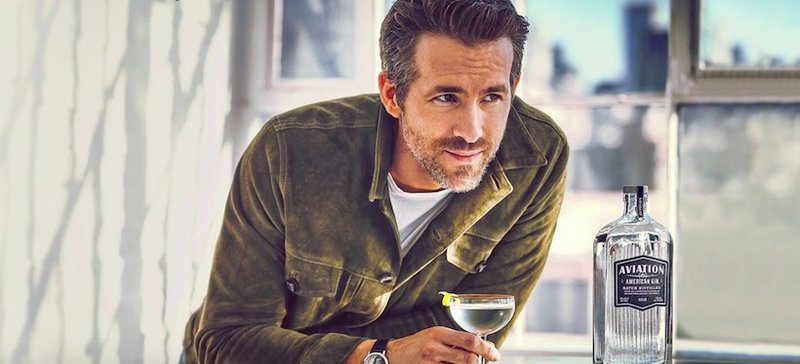
Ryan Reynolds's approach to brand ownership is best understood not as a business strategy but as a content strategy that happens to generate business outcomes. The foundational decision in his brand-building arc was not the acquisition of an equity stake in Aviation American Gin or Mint Mobile — it was the creation of Maximum Effort Marketing, the content company he co-founded with George Dewey in 2018. Maximum Effort is the engine. Aviation and Mint were the vehicles it ran through first. The insight underlying all of it is that an entertainer's most valuable commercial asset is not their name or their face but their creative sensibility — and that creative sensibility, applied to a brand's marketing rather than sold to an agency, creates compound value that flat endorsement fees cannot capture.
Aviation American Gin was founded in 2006 by Christian Krogstad and Ryan Magarian in Portland, Oregon. It was an authentic craft spirits brand with real product history and genuine critical recognition — it won awards in blind tastings, built a following among bartenders and spirits enthusiasts, and developed retail distribution over a decade of patient building. Reynolds acquired an undisclosed minority stake in late 2018, investing approximately $4 million. He became the brand's face and creative director simultaneously — but "face" undersells the role. He became the brand's marketing department.
The Aviation campaigns that followed — produced by Maximum Effort, frequently starring Reynolds in various degrees of self-aware absurdity — were designed to function as entertainment content that happened to include a product. The Peloton ad parody, produced within 48 hours of the original Peloton holiday advertisement generating widespread mockery, featured the wife from that advertisement discovering solace in Aviation Gin. Reynolds and his team identified the cultural moment, produced a response in real time, and released it before the news cycle moved on. The clip was viewed more than 70 million times. Aviation spent approximately $0 in media placement to generate those views. A conventional brand would have spent millions on television spots to reach a fraction of that audience.
Diageo acquired Aviation American Gin in August 2020 for $610 million — a deal structured with an upfront payment and performance earn-outs. Reynolds's estimated personal return, on an investment of approximately $4 million made less than two years earlier, was in the range of $130 to $150 million. The return multiple — conservatively 30x, potentially higher depending on the earn-out achievement — reflects not the typical appreciation of a premium spirits brand over two years but the specific value that Maximum Effort's marketing had added to the brand during Reynolds's ownership. Diageo was not buying Aviation gin. They were buying the brand that Aviation gin had become with Reynolds as its creative director — a media-generative brand that produced earned coverage at a rate no conventional marketing budget could replicate.
Mint Mobile was a different category but the same playbook. The wireless carrier, which operated as a mobile virtual network operator on T-Mobile's infrastructure, had been founded in 2016 offering low-cost prepaid plans. Reynolds acquired approximately 25% of the company around 2019. His marketing approach was identical to Aviation: treat the product as a premise for entertainment, be honest about the product's value proposition (low-cost phone plans, not luxury), and produce content that people choose to watch rather than content they are paid to endure. Mint Mobile's advertisements became a genre of their own — low-budget, self-deprecating, frequently featuring Reynolds acknowledging the awkwardness of a famous person selling phone plans. The authenticity of the approach was its commercial asset.
T-Mobile announced the acquisition of Mint Mobile in March 2023 for up to $1.35 billion, subject to regulatory approval. Reynolds's estimated share, based on his reported 25% stake, was approximately $300 million or more depending on earn-out provisions. The combined personal return from Aviation and Mint — approximately $450 million or above, from investments made within a three-to-four-year window — is one of the most concentrated wealth-creation events by a celebrity founder in recent commercial history.
The structural insight is the one that generalizes. Reynolds did not need to know the spirits industry to create value at Aviation. He did not need to understand cellular networks to create value at Mint Mobile. What he brought to both was a content operation — Maximum Effort — that could generate marketing outcomes at a fraction of conventional advertising costs, because the content itself was the marketing. The brand's media budget was structurally near zero because Reynolds's creative output was the distribution channel.
For any celebrity contemplating brand ownership, the Reynolds model presents the most economically efficient architecture available: the celebrity's creative personality IS the marketing infrastructure, which means the brand's operating costs are lower than any comparably-scaled competitor, which means the margin available for quality product and equity appreciation is higher. The prerequisite is that the celebrity's creative output must be genuinely entertaining — a prerequisite Reynolds meets at a standard that most would struggle to replicate, but the model itself is exportable to any artist whose public persona is sufficiently compelling to function as content.
Starpower Take Reynolds proved that the highest ROI version of celebrity brand ownership isn't necessarily the category you know best — it's the one where your personality is the marketing. For K-beauty, a LatAm artist whose humor, warmth, or cultural voice is the content strategy doesn't need to spend on traditional advertising. The audience is already there, and the brand's media cost is zero.
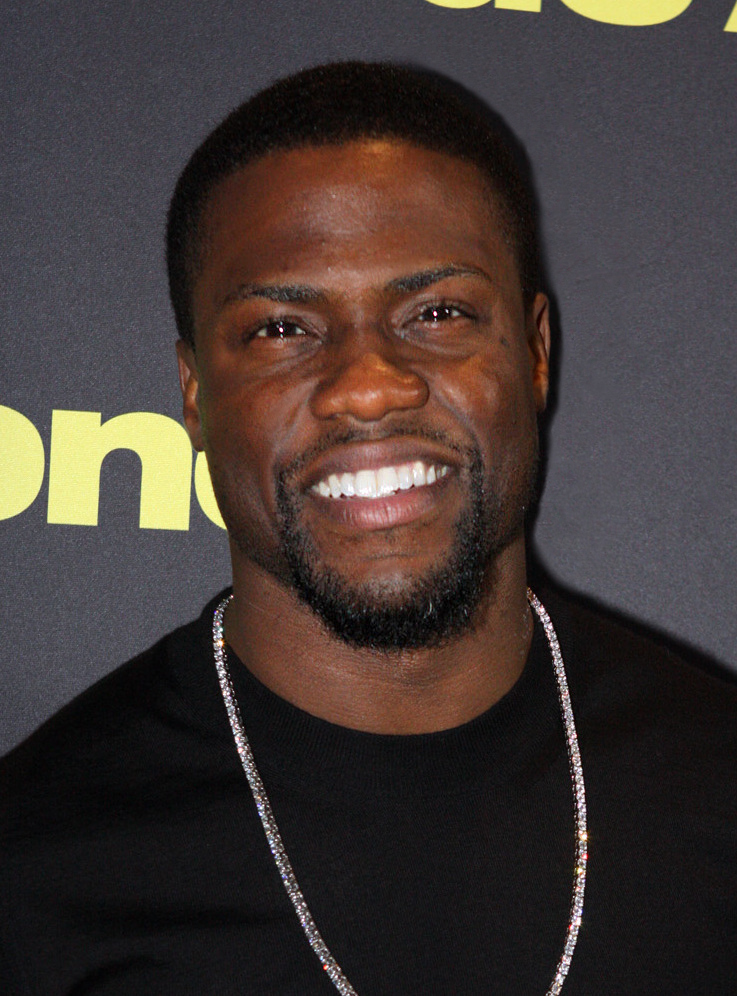
Kevin Hart has built one of the most deliberately diversified celebrity business portfolios in American entertainment — a structure that reflects a strategic philosophy distinct from both the all-in founder model (Casamigos, Fenty) and the rapid-fire exit model (Reynolds). Hart has placed multiple bets across adjacent verticals simultaneously, retaining operational involvement in none of them while remaining at the cultural center of all of them. The result is a portfolio whose aggregate value may be less concentrated than a single Beats-scale outcome, but whose downside risk is commensurately lower and whose breadth reflects a different theory of how celebrity business empires are constructed and sustained.
The portfolio spans: Laugh Out Loud (the comedy content platform and production company Hart founded in 2017, backed by Lionsgate with an initial $100 million commitment); HartBeat Productions (his film and television production company, which produced Fatherhood for Netflix and a pipeline of subsequent projects); Gran Coramino Tequila (launched in 2022 in partnership with Juan Domingo Beckmann, a sixth-generation member of the Cuervo family and CEO of Casa Cuervo, the world's largest tequila producer); Centr (the fitness and wellness application co-founded with his trainer and nutrition team); and 1415 Entertainment (his artist management company). Each of these represents a distinct business with its own management team, its own growth trajectory, and its own exit optionality.
Gran Coramino is the most instructive single element of the portfolio for the K-beauty parallel. The tequila was launched as a cristalino — a premium clear expression of tequila that has been aged and then filtered through charcoal — in a market category that was growing rapidly among consumers who had graduated from blanco to reposado and were ready for a more complex, spirits-forward expression. The name pays tribute to Hart's grandfather, Coramino. The partnership with Beckmann brings manufacturing expertise from the Cuervo family's six generations in the category, global distribution relationships, and the operational infrastructure of one of the world's largest spirits companies.
The partnership structure is worth examining carefully. Hart is not a passive endorser of Gran Coramino; he has an equity stake in the brand and active creative involvement in its marketing direction. Beckmann's Cuervo relationship provides what no celebrity founder could acquire independently: established manufacturing processes for a highly regulated and technically demanding product category, distribution relationships across 78 international markets, and retail credibility with buyers who have decade-long relationships with the Cuervo family. Hart provides cultural reach and storytelling. Beckmann provides category expertise and operational scale. Neither party replicates what the other brings.
The diversified portfolio model raises a legitimate question about concentration versus breadth. Casamigos achieved a $1 billion exit because Clooney and his co-founders were building one thing, for seven years, without diversion. Hart's approach — multiple brands, multiple verticals, simultaneous development — means that no single brand receives the concentrated founder attention that produced the Casamigos outcome. This is not a criticism; it is a structural trade-off. A portfolio of seven businesses each valued at $100 million produces the same aggregate as one business valued at $700 million, with considerably lower correlation risk. If one brand fails, the others are unaffected. If one brand exits at $500 million, the portfolio mathematics still work even if three others underperform.
The operational requirement of the Hart model is the element that most celebrity founders underestimate. A diversified portfolio can only function if each business has a professional management team capable of operating the business while the celebrity founder is on tour, on set, or otherwise unavailable. Hart is among the most professionally structured celebrity entrepreneurs in the industry: Laugh Out Loud has a CEO; HartBeat Productions has a studio head; Centr has a technology leadership team. He has hired operators, not simply assembled brand assets. The businesses run because experienced managers run them; Hart's role is cultural leadership and brand direction, not operational management.
The lesson for artists earlier in their career — before the Casamigos-style concentration is feasible, before the Reynolds-style dual exit opportunity presents itself — is that the diversified portfolio is the appropriate model when the celebrity's time is the constraining resource. Building one brand properly requires significant founder time in the critical early years. Building six brands simultaneously requires hiring the operators who substitute for that time, which requires the capitalization to hire them, which typically follows a first significant commercial success. Hart built his portfolio sequentially, not simultaneously: Laugh Out Loud first, then the others as the capital and organizational capacity allowed.
The Gran Coramino model — structured partnership with an established industry operator, celebrity founder retaining equity and creative control, manufacturing and distribution provided by the partner — is the template that Starpower operationalizes in K-beauty. The celebrity brings the platform and the cultural narrative. The manufacturing partner brings the technical capability and the market access. Equity stays with the founder. The business is run by professionals. The outcome is not dependent on the celebrity's continued personal attention to daily operations.
Starpower Take Hart's portfolio model teaches that celebrity brand ownership doesn't require you to choose between your career and your brand — but it does require operational partners who can run the business while you're on tour. For Starpower partners, this is the design: we are the operational layer. The artist brings the platform; we run the brand.
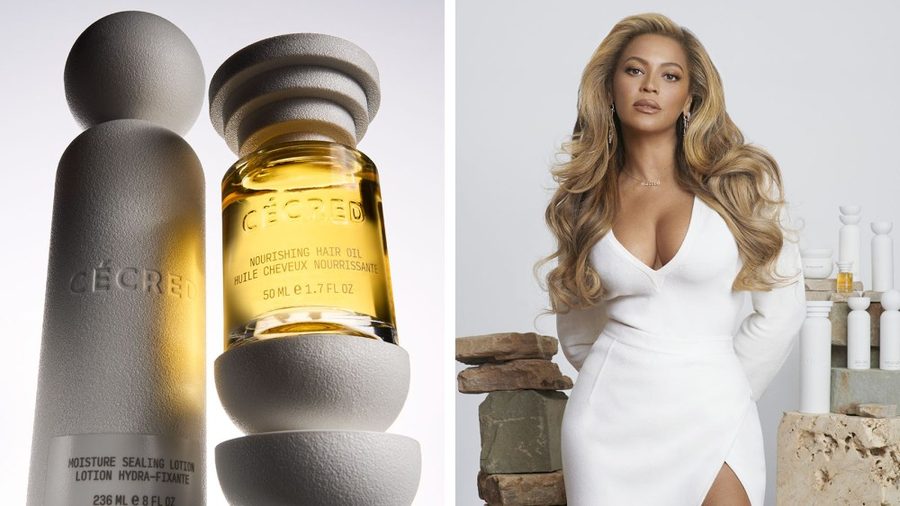
Beyoncé's trajectory from Ivy Park to Cécred constitutes the most instructive recent case study in what celebrity founders learn when a major corporate partnership underperforms its projections — and what they do with that knowledge. The Ivy Park story is not a failure. It is a recalibration: a founder with sufficient leverage to walk away from a distribution partnership that was not serving her brand vision, and the capital to build independently from a position of 100 percent equity rather than the shared-control structure the Adidas arrangement required.
Ivy Park originated in 2016 as a partnership between Beyoncé and Philip Green's Topshop retail group. The brand launched with Beyoncé as co-owner and creative director, positioned as athletic-luxury athleisure targeting the intersection of performance and fashion. The partnership ended in 2018 when Beyoncé exercised her contractual right to acquire Green's stake — a decision prompted by the wave of harassment allegations against Green that emerged during the #MeToo movement. She bought him out entirely. Ivy Park became 100 percent hers. The next question was how to scale it.
The answer came in August 2018: a multiyear deal with Adidas, under which Beyoncé retained majority ownership of the Ivy Park intellectual property and brand while Adidas provided manufacturing, global retail distribution, and marketing co-investment. The deal was announced with the kind of coverage reserved for major cultural events — because a partnership between the world's most commercially significant musical artist and the world's second-largest sportswear company was a genuine commercial event, not a product launch. Early projections, reported in trade media, suggested potential annual revenue of $100 million to $250 million.
The execution was more complicated than the projections suggested. The first Ivy Park drop with Adidas — Ivy Park Orange, released January 2020 — was met with strong initial demand and significant resale market activity, indicating genuine consumer interest. Subsequent drops — Icy Park in January 2021, Dark Ivy in March 2021, and several capsule collections thereafter — generated media coverage and commercial activity but at volumes that reportedly fell short of the early projections. Sources familiar with the partnership's financials cited annual revenue in the $40 to $50 million range — meaningful, but well below the top end of what had been publicly anticipated.
The structural reasons for the gap between projected and achieved revenue illuminate the complexity of celebrity-corporate brand partnerships at scale. Adidas's retail infrastructure prioritized its own core franchises — Stan Smith, Ultraboost, NMD — and its other celebrity partnerships, most significantly the Yeezy collaboration with Ye, which at its peak generated an estimated $1.5 billion annually and commanded significant internal Adidas marketing attention. Ivy Park was competing for Adidas retail floor space, marketing budget, and buying attention in an environment where those resources were not exclusively allocated to it. The dependency on Adidas's internal prioritization meant that Ivy Park's commercial performance was not entirely under Beyoncé's control, even though she retained majority ownership of the IP.
Adidas ended the partnership with Beyoncé in November 2023, in a period when the company was simultaneously navigating the financial and reputational aftermath of its termination of the Yeezy partnership — itself a decision that had removed approximately $1.5 billion in annual revenue from Adidas's top line. The simultaneous exits of both major celebrity co-brand partnerships reflected a broader Adidas strategic recalibration rather than a specific judgment about Ivy Park's commercial quality. But the outcome for Beyoncé was an unencumbered return of the brand — 100 percent of the IP, with no corporate partner constraints on how to deploy it.
Cécred launched in February 2024. The category — haircare, specifically targeting scalp health, hair repair, and the particular needs of textured and chemically treated hair — was chosen with evident personal meaning: Beyoncé's grandmother, Agnéz Deréon, was a seamstress and beauty practitioner; her mother, Tina Knowles, co-created the House of Deréon fashion brand. The haircare industry is the one consumer category in beauty where Black consumers have historically had disproportionate purchasing power and disproportionate underservice from major brands. Cécred's founding ranges — a Clarifying Shampoo, a Moisturizing Deep Conditioner, a Scalp Serum — addressed this gap with formulas developed through research partnerships that Beyoncé's team has described as years in development.
The distribution model for Cécred is fully independent: DTC through cecred.com, with limited retail partnerships selected for brand positioning rather than volume. No Adidas, no corporate co-investor with competing priorities. 100 percent of the equity sits with Beyoncé. The commercial cost of this independence is real: without Adidas's retail infrastructure, reaching the $50 million revenue threshold requires building distribution relationships that an operational partner would have provided. The financial benefit is also real: 100 percent of whatever Cécred is worth belongs entirely to its founder.
The Ivy Park to Cécred trajectory demonstrates that even celebrity founders with the cultural leverage of Beyoncé can find that major corporate partnerships constrain brand development in ways that are not apparent until the partnership is underway. The lesson is not to avoid partnerships — the Fenty Beauty LVMH structure demonstrates their value when designed correctly. It is to design partnerships in which the celebrity founder retains not just equity but operational control over the decisions that determine brand quality: formula, positioning, distribution choices, and the pace of growth.
Starpower Take Beyoncé's pivot from the Adidas partnership to Cécred independence is the clearest real-world illustration of what control costs and what it gains. She traded scale for autonomy — and gained 100% of the equity in return. For LatAm artists with Starpower's manufacturing access and a strong DTC channel, the Cécred model is the one: full equity, K-beauty formulas, no partner that outgrows its usefulness.
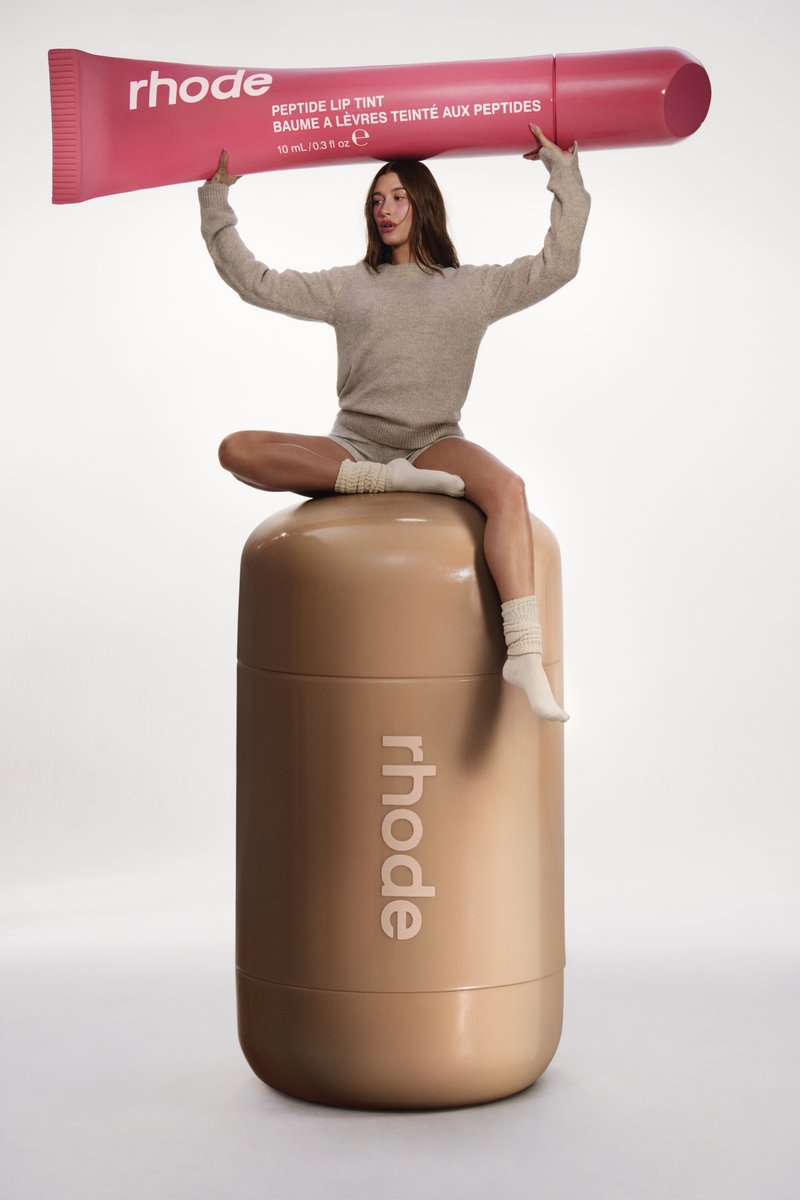
Rhode's trajectory from June 2022 launch to $1 billion acquisition by e.l.f. Beauty in May 2025 is the fastest celebrity-beauty exit on record — and it is the cleanest demonstration that the K-beauty-adjacent playbook (viral product, controlled distribution, authentic founder voice) still compresses timelines that legacy beauty plays by 70 percent or more. Hailey Bieber co-founded the brand with Lauren Rothberg (creative) and Michael D. Ratner (operator), retaining majority equity from inception. The initial product set was deliberately narrow: a Peptide Lip Treatment, a Barrier Restore Cream, and a Peptide Glazing Fluid. Three hero SKUs. No clutter.
The commercial logic of the narrow launch was explicit. Rather than introduce a full range that would dilute marketing attention and force retail partnerships before the brand had earned pricing power, Rhode opened with three products at premium price points, sold exclusively through rhodeskin.com. The "glazed" aesthetic — dewy, barrier-forward skin — became a TikTok category that Rhode had effectively defined. Videos mentioning "glazed skin" and Rhode's products accumulated billions of views across the first eighteen months. Product shortages were the norm, not the exception — a controlled scarcity that compounded demand rather than capping it.
The Sephora partnership (announced 2024, rollout beginning early 2025) was the structural inflection point. Rhode moved from DTC-only to full Sephora distribution at a moment when the brand's unit economics were already proven. The retailer was acquiring access to a brand that had already validated its product-market fit at scale, and was paying premium wholesale terms accordingly. The e.l.f. acquisition followed months later: $800 million in cash and stock at closing, with up to $200 million in earnout tied to revenue milestones. Hailey's personal outcome from the transaction, based on her ownership stake, is estimated in the high hundreds of millions.
The Rhode exit establishes the current benchmark for celebrity-founded beauty: three years from launch to a billion-dollar exit, built on three hero products, one controlled DTC channel, and a single strategic retail partnership introduced only after the unit economics were proven. The structure is replicable. The essential ingredients are founder authenticity, narrow-range launch, and sufficient capital to hold distribution discipline during the early viral-growth phase.
Starpower Take Rhode proves that a celebrity beauty brand does not need ten years and eighty SKUs to reach a billion-dollar exit. It needs three hero products, a single controlled channel, and founder patience during the 18-month viral compounding window. K-beauty formulation is the last mile. Starpower's manufacturing access provides the first.
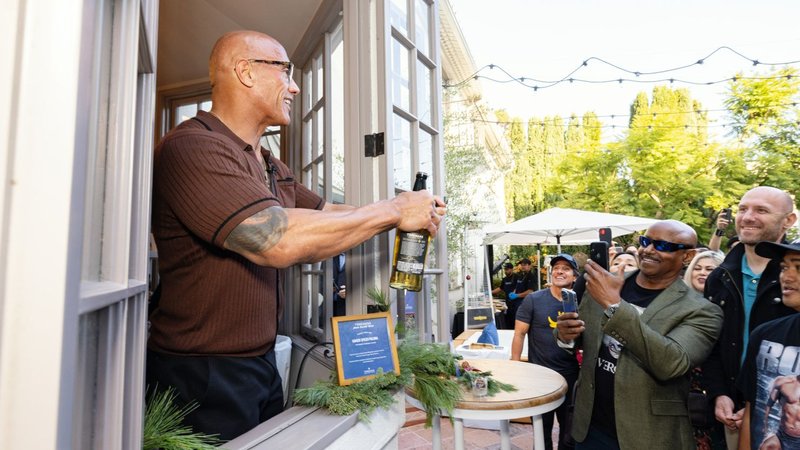
Teremana is the fastest-scaling ultra-premium tequila brand in the history of the category. Dwayne Johnson co-founded the brand in March 2020 with Jenna Fagnan (ex-Tequila Avión), Ken Austin (founder of Avión), and Dany Garcia (Johnson's business partner and the operational center of the venture). The brand is produced at a small-batch highland-Jalisco distillery (Destileria Teremana de Agave) and distributed through Mast-Jägermeister's Sidney Frank Importing — the same distribution network that scaled Grey Goose from launch to the Bacardi acquisition at $2 billion-plus.
The commercial trajectory is the cleanest expression of the celebrity-spirits playbook. Teremana sold approximately 300,000 cases in its first twelve months — a volume that took Casamigos approximately four years to reach. By year two it was past 600,000 cases. By 2024, trade-press estimates put the brand at over 1 million cases annually, with a valuation estimated in the $3.5 billion range by Spirits Business and Fox Business reporting. No sale has been announced; Johnson and Garcia have been public about their preference for long-term ownership over a near-term exit.
The structural lesson for celebrity founders evaluating spirits is the importance of the distribution partner. Sidney Frank's infrastructure provided Teremana with immediate national on-premise and off-premise presence — an asset that a standalone launch would have required five to seven years and significant capital to build. Johnson's cultural and social media presence (over 400 million Instagram followers) drove consumer pull-through at a velocity that the distribution backbone could absorb. The two inputs compound: the distribution makes the velocity into revenue, the celebrity makes the distribution worth prioritizing.
The financial structure — Johnson and Garcia as founding equity holders, Mast-Jägermeister as strategic distribution partner rather than majority investor — preserves the exit optionality that has driven the category's wealth creation. When Teremana does eventually transact, the founding team will capture substantially all of the value creation. That is the difference between a celebrity endorsement deal and a celebrity-founded brand with aligned operators.
Starpower Take Teremana's acceleration is what happens when celebrity reach and distribution infrastructure compound. K-beauty has an analogous structural opportunity: celebrity founder supplies the cultural pull, the right manufacturing and distribution partner supplies the velocity. Starpower is the LatAm-facing K-beauty version of what Sidney Frank did for Teremana.

818 Tequila launched in May 2021, three-and-a-half years after Kendall Jenner began the development process. The brand is named for the area code of her hometown, the San Fernando Valley. The product range at launch was three expressions — Blanco, Reposado, and Añejo — produced at a small distillery in Jalisco. Distribution is through Republic National Distributing Company (RNDC), with placements across major off-premise chains and a growing on-premise footprint.
The commercial story is less about explosive first-year scale (it did not match Teremana's trajectory) and more about the durability of the category for celebrity founders with authentic roots in LatAm-adjacent culture. Within 18 months of launch, 818 was the second-ranked celebrity-tequila brand in the United States by case volume — behind Teremana, ahead of Casamigos' post-acquisition growth. Trade estimates put 818 at approximately 500,000–800,000 cases annually by 2024, with a valuation in the $600 million-plus range.
Jenner retains majority equity. There has been no partial or full acquisition. The brand's long-term value, if a transaction ever occurs, will reflect the category's established exit multiples — Casamigos at $1 billion in 2017, with subsequent comparable transactions at higher multiples of revenue. The structural choice to hold rather than sell in the 24–48 month window that Casamigos pursued is itself an equity-maximizing decision, given how many categories compound value beyond the first attractive acquisition offer.
Starpower Take 818 demonstrates that the celebrity-tequila playbook remains open for founders with authentic origin stories. For Shakira, Anitta and their peers, the equivalent K-beauty opening is present now — and the multi-year window before the category matures is narrower than 818 had.
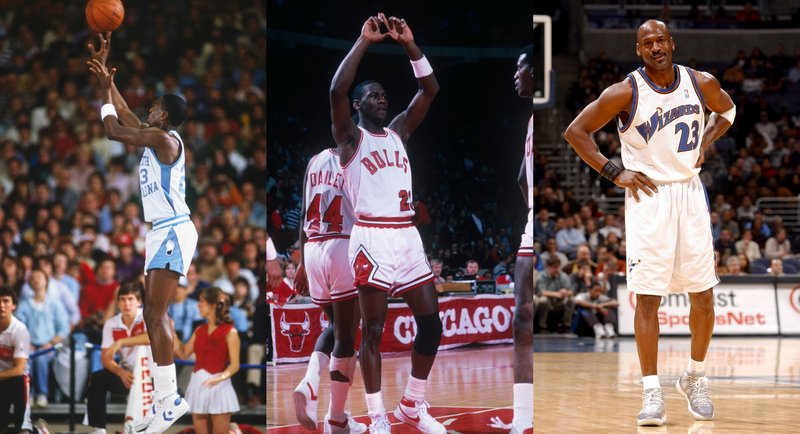
Jordan Brand is the longest-running and most commercially significant celebrity-linked brand in modern history. The Air Jordan 1 debuted in 1984, designed by Peter Moore, under a $500,000 first-year contract that was at the time an unprecedented endorsement payment for a rookie athlete. What made the deal structurally different from its predecessors was not the fee: it was the ongoing royalty participation Jordan's representatives (led by David Falk) negotiated on every sneaker sold under his name. Nike took the production and distribution risk. Jordan took a percentage of every pair.
By 1997, Nike had formalized the arrangement by creating Jordan Brand as a standalone division. The royalty-and-equity structure has continued to generate cumulative earnings to Jordan estimated in the $1.5 billion-plus range over the brand's 40-year history — more than he earned from his NBA career and all of his other endorsements combined. Fiscal year 2024 Jordan Brand revenue (per Nike's annual report, Sportico reporting) was $7 billion, representing approximately 13 percent of Nike's total brand revenue.
The Jordan structure is the architectural template that every celebrity-equity deal now attempts to replicate. The operational asymmetry — Nike builds, MJ's brand powers demand — means the arrangement has compounded across technological eras, fashion cycles, and generational consumer shifts. Jordan did not have to be operationally involved for the brand to compound. The structure carried the compounding. His presence supplied cultural authority.
For today's celebrity brand architects, the Jordan lesson is not to expect a $7-billion-a-year outcome. It is to understand that the right structural agreement — one in which the celebrity participates in both royalty flow and ongoing equity — produces returns that compound beyond the founder's active career by decades. The mathematics of decades-long royalty streams at scale are difficult for the founder to price correctly in year one. That is precisely why the structure is worth negotiating carefully at the outset.
Starpower Take Jordan Brand is the compounding case. The structural insight: a celebrity who participates in both royalty and equity can see their brand outgrow their active career by decades. Starpower designs K-beauty partnerships with the same compounding intent — equity retained, royalty on every unit, a brand that carries forward long after the launch campaign ends.
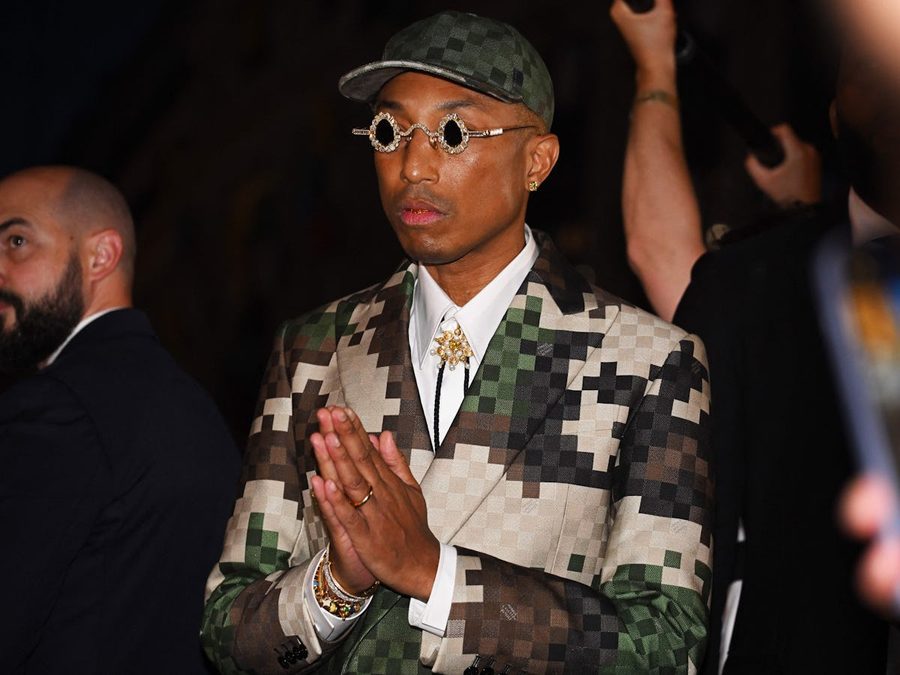
Pharrell Williams operates the most instructive multi-lane celebrity brand portfolio in modern culture. The owned assets begin with Billionaire Boys Club and Ice Cream, co-founded in 2003 with Japanese designer Nigo. The brands established streetwear-as-luxury a decade before the category became a mainstream commercial phenomenon, and remain independent today. Pharrell's separate equity participation in Beats Electronics — finalized at Apple's $3 billion acquisition in 2014 — established his credentials as a serious equity operator beyond the ownership of his own streetwear brands.
The February 2023 appointment as Louis Vuitton Men's Creative Director (succeeding the late Virgil Abloh) added the highest-altitude role in men's luxury fashion to the portfolio. The LV role is structurally a salaried position rather than an equity stake in the parent company — but the reputational and network compounding it provides to Pharrell's owned brands and his broader commercial platform is substantial, and is itself a form of compensation.
The structural lesson is the multi-lane portfolio itself. Pharrell does not choose between ownership equity in independent brands and high-altitude creative direction at a major luxury house. He operates both simultaneously. The ownership provides the long-term wealth compounding. The creative direction at LV provides the cultural authority and network that make the owned brands more valuable. The two lanes reinforce each other rather than competing for his attention.
Starpower Take The multi-lane model is the future of celebrity commercial architecture. Own your category-defining brand; participate as creative leader where equity is not on offer. K-beauty ownership compounds faster than any editorial or endorsement role — and it does not preclude the editorial and endorsement roles that amplify it.
Goop began in 2008 as a weekly email newsletter — recipes, travel notes, wellness recommendations — that Gwyneth Paltrow sent to friends. By 2014 it had become a commerce platform with its own skincare and wellness product lines. By 2018 it raised a $50 million Series C at a $250 million-plus post-money valuation, led by Felix Capital with participation from Lightspeed. Paltrow retained majority ownership and day-to-day operational control throughout.
The commercial arc is the most consistent demonstration in modern consumer business that polarization compounds attention faster than caution. The jade-egg controversy (2017), the FDA warning letter (2018), the Netflix documentary series, and a dozen smaller flashpoints became incidents of brand reinforcement rather than damage. Each generated tens of millions of impressions. Each recruited new believers faster than it lost skeptics. The financial result is a brand that has grown topline revenue approximately every year since launch, against a category (celebrity wellness) that has otherwise experienced significant churn.
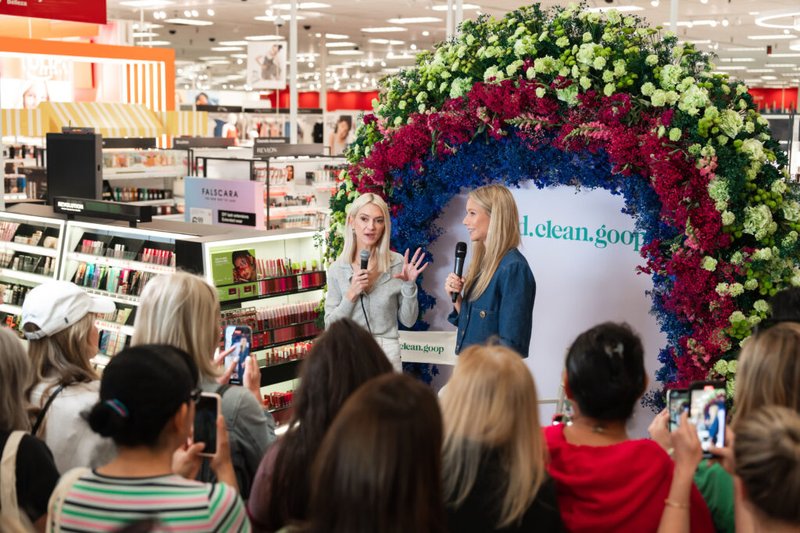
The 2024 Target partnership (good.clean.goop, Gwyneth's mass-accessible sub-brand) represents the next-phase move: mass distribution through a retail partner with the scale to reach consumers outside Goop's DTC customer base, without diluting the parent brand's premium positioning. The structure — a distinct product line for mass retail, operated in parallel to the premium DTC brand — is the same architecture that Kylie Cosmetics used before the Coty acquisition, and that Rhode is beginning to test through its Sephora expansion.
Starpower Take Goop's playbook — polarize deliberately, maintain equity discipline, expand distribution only when the premium brand has earned pricing power — maps directly onto K-beauty. LatAm artists with strong personal points of view are positioned to do what Gwyneth did for wellness: build a brand whose opinions are its competitive moat.
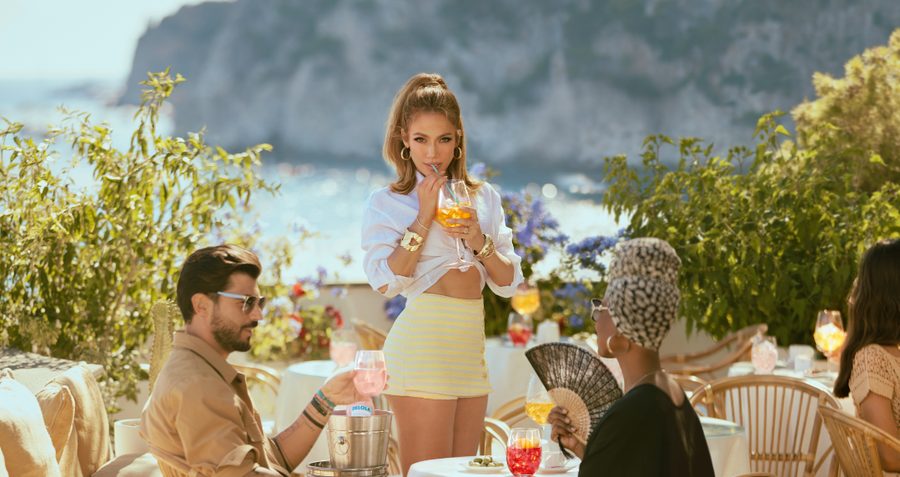
Jennifer Lopez's brand portfolio is the most instructive recent example of the "serial celebrity founder" model — two operationally independent brands in adjacent categories, launched three years apart, both retained under founder ownership. JLo Beauty launched in January 2021 as a skincare line centered on Lopez's signature "olive complex" serum. Delola launched in 2023 as a line of low-ABV bottled cocktails, partnered with DIPS for production and distribution.
The commercial logic of the portfolio is more sophisticated than it first appears. The two brands address different consumer occasions (morning skincare routine versus evening social gathering), use different distribution channels (Amazon/HSN/DTC for skincare, liquor retail for Delola), and attract different financial partners. JLo Beauty's customer is repeat-purchase on a 30-to-60-day cadence; Delola's customer is occasion-driven with potential for on-premise adoption. Combined, the portfolio produces more diversified revenue and more resilient unit economics than either brand would generate as a standalone launch.
Combined estimated revenue across the two brands was approximately $150 million-plus by 2024. Neither has had a majority-investor dilution event. Lopez retains operational influence and founder-level equity in both. The portfolio structure is particularly relevant to celebrity founders 40 years old and above, whose audience has accumulated across multiple career phases and can be activated across multiple consumer categories simultaneously.
Starpower Take Late-career celebrity founders have more brand equity to deploy, not less. A single K-beauty launch is the entry point; the sequential portfolio — skincare, then fragrance, then color, each founder-controlled — is the compounding path Starpower is designed to build alongside.
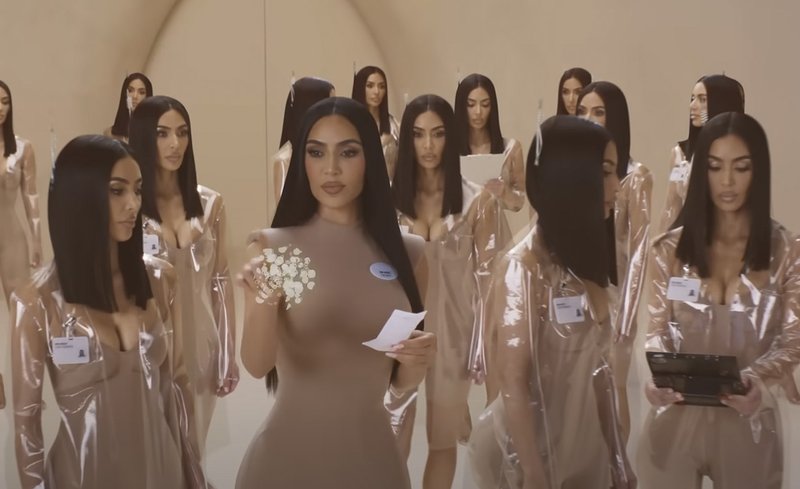
SKIMS launched in September 2019 as a shapewear brand co-founded by Kim Kardashian, Jens Grede, and Emma Grede. The founding thesis was narrow and data-defensible: the $2 billion-plus US shapewear category was dominated by products that did not fit the diversity of body types and skin tones of its actual consumers. Nine nude shades at launch — a direct echo of the Fenty Beauty 40-shade insight applied to a different garment category — established SKIMS's positioning before a single product was sold.
The commercial trajectory has compounded aggressively. A $270 million Series C in July 2023 at a $4 billion valuation (Lone Pine Capital, Thrive Capital) was the inflection point that validated the business at institutional-investor scale. By 2024 the brand had expanded into loungewear, bodysuits, swimwear, menswear (2024 launch), and a substantive retail footprint including its first Paris flagship and Nordstrom placements. The Oscar 2024 "Skims Labs" commercial — an industrial-aesthetic brand film featuring dozens of Kim lookalikes — represented one of the highest-production-value celebrity brand marketing executions in recent memory.
The structural lesson is the founder-as-operator model. Kim Kardashian is not a figurehead at SKIMS; she is functionally co-CEO with Jens Grede. The editorial direction, the marketing approvals, the celebrity co-marketing deals, and the major product category decisions run through her. The Grede partnership provides the institutional operating discipline — supply chain, wholesale, finance, corporate governance — that a founder without prior CPG experience would otherwise have to hire for. Together, the three co-founders produce a brand that compounds equity at institutional-investor rates while maintaining founder control.
Trade press in November 2025 reported the brand was in active conversations about its next funding round at a valuation north of $5 billion. A public market listing has been discussed in multiple reporting cycles but has not yet occurred. Either outcome — higher private round or IPO — would position SKIMS as one of the largest celebrity-founded brands in modern history, rivaling Fenty Beauty and surpassing Kylie Cosmetics in absolute valuation terms.
Starpower Take SKIMS is proof that a celebrity co-founder who actively operates — rather than endorses — can compound equity at institutional venture rates. The structural requirement is an operating partner of Grede's caliber. That is the role Starpower is engineered to play for K-beauty launches in LatAm and beyond.
This is the most instructive case study in the series — not because it features extraordinary outcomes but because it features ordinary ones: the decisions that looked reasonable in the moment, that every advisor would have recommended, that every precedent supported, and that in retrospect cost more than any single career decision ever taken in the opposite direction. The pattern is consistent enough across enough individuals and categories that it has ceased to be a series of individual mistakes and become a structural feature of how celebrity commercial relationships are organized. Understanding the structure is the prerequisite for escaping it.
Begin with the foundational story. Curtis James Jackson III — 50 Cent — was at the peak of his commercial influence in 2004 when he was approached to participate in the promotion of Glacéau Vitamin Water, a flavored water brand founded in 1996 that had spent eight years building niche distribution in the New York metropolitan area. Rather than accepting a flat endorsement fee — which, for an artist of his commercial profile and at a moment when Get Rich or Die Tryin' had sold 12 million copies in its first calendar year, would have been estimated in the range of $2 to $3 million — Jackson negotiated for equity in the company. The precise stake he received has not been publicly disclosed, but Coca-Cola's 2007 acquisition of Glacéau for $4.1 billion produced a personal return to Jackson that he has publicly stated was approximately $100 million after taxes. The equity multiplied his outcome by a factor of approximately 40 to 50 compared to the flat fee he could have taken instead.
What made this possible in 2004 — when equity negotiations were far less common in celebrity commercial arrangements than they have subsequently become — was a combination of Jackson's commercial leverage, his willingness to accept risk, and the structure of his management relationship at the time, which included G-Unit Records co-owner Jimmy Iovine as a background advisor. Iovine, who had already built wealth through equity participation in multiple businesses, understood the difference between income and asset creation in ways that most artist managers in 2004 did not. The management environment mattered. The advice Jackson received was structurally different from the advice most artists were getting at the time — and the outcome reflected that difference.
The LeBron James example is the complementary cautionary data point. James was offered equity in Beats Electronics at an early stage of the brand's development, when the valuation was low and the equity stake offered was commensurately meaningful. He declined. The flat endorsement fee he accepted in its place — a decision that was commercially reasonable at the time, given that Beats was an unproven startup in a crowded category — represented a fraction of what the equity would have been worth at the Apple acquisition. The estimate most consistently cited in business media: the equity offer would have been worth approximately $30 million at the 2014 transaction. The endorsement fee he received was considerably less. The gap is not catastrophic — LeBron James has subsequently built SpringHill Company, the SpringHill brand, and Lobos 1707 Tequila with genuine equity sophistication — but it is the most frequently cited illustration of the cost of taking the check instead of the stake.
The cognitive bias at work in both cases — and in the dozens of similar decisions that have not received public attention because the acquired companies were smaller and the foregone returns were proportionally less remarkable — is present-value bias: the psychological tendency to treat near-term certainty as more valuable than equivalent or superior expected value that is delayed and uncertain. A $2 million endorsement check is real and immediate. A 2% equity stake in a startup worth $10 million is abstract, uncertain, and carries zero liquidity. Every financial planning framework that a typical artist's management team uses is built around certain near-term income, because artists' careers are uncertain and management fees are paid on revenue, not on asset appreciation. The incentive structure of artist management systematically biases toward the check.
This is the structural problem that the Regret File illuminates. The decision between equity and fee is not primarily a financial intelligence question — most artists understand, in the abstract, that equity compounds. It is an incentive alignment question. The manager who negotiates a $3 million endorsement deal earns $450,000 to $600,000 in management fees, immediately, with certainty. The manager who negotiates a 3% equity stake in an unproven brand earns nothing until that stake is liquid — which may be never, and which in any case requires years of patience. The manager's financial interest and the artist's financial interest are not aligned when the decision is equity versus fee. This is not a criticism of artist managers; it is a description of how the fee structure creates an incentive that makes the flat deal the default recommendation regardless of its long-term financial merit.
The beverage category has generated more documented celebrity equity misses than any other, partly because the category's exit environment — Coca-Cola, PepsiCo, Diageo, AB InBev, and Constellation all regularly acquire premium beverage brands at significant multiples — makes the foregone returns calculable after the fact. Athletes and musicians who promoted beverage brands in the late 1990s and 2000s, taking flat fees when equity might have been available, have watched those brands be acquired for hundreds of millions of dollars with no ongoing participation. The same pattern exists in beauty, in technology accessories, and in the streaming era of music. In each category, the exit environment rewarded founders and equity holders while endorsers received their fees and watched from the outside.
The structural solution is not complicated, but it requires deliberate organization. Separate the financial decision from the management relationship: use an independent financial advisor — not the same person who receives a commission on the endorsement fee — to evaluate equity opportunities. Treat equity offers as investment decisions, applying long-term expected value analysis rather than present-value certainty preference. And work with brand-building partners who are structurally aligned with your equity outcome — whose fees and economics are tied to the brand's valuation rather than to a consulting arrangement that is indifferent to whether you hold equity or not.
The Regret File's final lesson is the most important one: the artists who left the most money on the table were not unintelligent. They were operating within a system that was structured, at every decision point, to recommend the fee. Changing the outcome requires changing the system — the management structure, the advisory relationships, and the partnership frameworks — not just the individual decision. Starpower is built to be a different structure. The alignment is the mechanism. The equity path is the default because it is in our interest as well as yours.
Starpower Take Every artist who took the endorsement check over the equity stake had a manager who got paid on the endorsement check. Starpower is structured differently: we build alongside you. Our outcomes are tied to your brand's equity value, not a consulting fee. That alignment is the mechanism that makes the equity path the default recommendation — not the exception.